November 25th, 2021

Bad breath: We’ve all dealt with it. You’ve been around people who have it and, like it or not, you have had it yourself. It can be embarrassing and uncomfortable, but how do you know if you have it? There is actually a simple test you can do to see if you have bad breath.
Wash your hands well, then put your finger in your mouth, way in the back. Scrape a little saliva from the back of your tongue, and then dab it on the back of your hand. Wait for one minute, then hold your hand to your nose and sniff. Is it fresh as a daisy? Or do you need to keep reading and learn how to freshen your breath?
How Bad Breath Starts
There are several ways that bad breath starts. Knowing the causes of bad breath is a solid start toward the cure.
- The bacteria in your mouth: Bacteria is always in your mouth. It covers your gums, hides between your teeth, and hangs out on your tongue. As it multiplies, it produces toxins that cause the foul odor in your mouth.
- Your bad habits: If you smoke cigarettes, a pipe, or cigars, or chew tobacco, you are not only harming your mouth and body, you are creating some really smelly breath.
- Your tonsils: If you still have your tonsils, they can be the cause of bad breath. They are pitted, so smelly substances can collect in the pits and lead to bad breath.
- Stomach issues: A stomach virus, ulcer, GERD, and other stomach issues could be the cause of your bad breath. A low-carb diet can put your body into a state of ketosis, which causes very bad breath.
- The foods you eat: Garlic, onion, and other pungent foods will linger with you … on your breath.
Tips for Busting Bad Breath
Achieving fresh breath isn’t difficult, but it does require a little work. Try these tips for fresher breath and a healthier mouth.
- Brush your teeth after every meal. You can also pick up a tongue scraper to use a couple of times a day to remove any lingering bacteria on your tongue.
- Floss once a day to remove food particles between your teeth as well as plaque. Your mouth will thank you.
- Gargle with special mouthwash to banish bad breath. The oxygen in it will kill the bacteria in your mouth that is causing your bad breath, and leave you fresh as a daisy!
- Drink water to avoid dry mouth, which is a common cause of bad breath.
- Ease your tummy troubles with antacids and other remedies. Ginger tea is a great tummy tamer.
- Chew gum that contains xylitol. Saliva keeps your mouth moist, and chewing gum makes you salivate. Bye bye, bad breath!
- Eat yogurt. It contains “good” bacteria that helps balance your gut and gives you a healthier mouth.
- Soothe your sinuses. Sinus infections can cause you to have bad breath. Actually, it is the post-nasal drip that causes the foul odor. Cure the infection and your breath will improve.
- Avoid all tobacco products (cigarettes, pipes, cigars, chewing tobacco, and snuff).
- Eat a healthy diet of fresh fruits and vegetables, lean meats, and whole grains.
And don't forget! Get regular dental checkups at Fabre Family Dental Care of Marrero.
November 18th, 2021

Our team at Fabre Family Dental Care of Marrero will tell you brushing on a regular basis is critical for a healthy mouth, but you can definitely overdo a good thing. Known as “toothbrush abrasion,” over brushing can lead to sensitive teeth and receding gums, not to mention the wearing down of the protective layers of your tooth enamel. Over brushing can also push back your gums, and in the process, expose the dentin layer under the enamel.
“So, how do I avoid over brushing?”
- Use a soft or extra-soft bristled toothbrush to prevent gum damage and wear on the soft tooth dentin
- Keep in mind which direction bristles face when you brush. They should be perpendicular, not parallel. Place the head of your toothbrush with the tips of the bristles at a 45-degree angle to the gum line and brush away!
- Move the toothbrush with short strokes and a scrubbing motion, several times in each spot – don’t saw back and forth across the teeth with your toothbrush.
- Apply just enough pressure to feel the bristles against the gums. If you are squashing the bristles, you're brushing too hard.
- Replace your toothbrush when you notice frayed and bent bristles.
- Brush for two minutes at a time
If you have any questions about proper brushing techniques, ask us about it at your next appointment or give us a call today!
November 11th, 2021

Temporomandibular dysfunction (TMD) refers to a diverse range of disorders that relate to muscular function in the jaw and face — the temporomandibular joint (TMJ). That could mean difficulty opening your mouth, pain in the jaw or face, or any sort of problem with the jaw joint.
TMD can be difficult to diagnose because of the varied causes. Whatever the case, an accurate diagnosis from Dr. Keith J. Fabre Jr. helps make treatment as successful as possible.
Most often, jaw problems will resolve themselves within several weeks or months. Surgeries like arthrocentesis, arthroscopy, and open-joint surgery should be a last resort. More conservative and reversible treatments should come first and are in fact the most critical step in the treatment of TMD.
Less invasive treatments like acupuncture and splints can be helpful, but that will depend on your particular case. It’s worth your while to speak with Dr. Keith J. Fabre Jr. at our Marrero office to learn about solutions that could work for you.
A combination of treatments will most often produce the greatest relief for TMJ patients. It’s a good idea to avoid activities that overuse the jaws, such as chewing gum or clenching your jaws.
You can be proactive in finding relief for TMD by trying the following remedies at home:
- Eat soft food: When you eat soft and/or blended food, your jaw gets an opportunity to rest. Avoid chewy and crunchy food, and food that requires you to open your mouth wide, like apples or corn on the cob.
- Apply moist heat: A hot water bottle wrapped in a moist towel can help reduce symptoms.
- Apply ice: Applying an ice pack wrapped in a cloth or towel for no longer than 15 minutes may also reduce pain and promote healing.
- Do jaw exercises: A physical therapist can help identify the exercises that will work for you. Jaw exercises have been shown to be an effective treatment method that can be performed at home.
- Relaxation: Actively try to relax the muscles of the face and lips, and let your teeth come apart. Many find meditation, yoga, and slow, deep breathing to be helpful for reducing stress and tension.
- Avoid wide yawns: Keep your fist under your jaw when you feel a yawn coming on, to keep your jaw from opening too widely.
October 28th, 2021
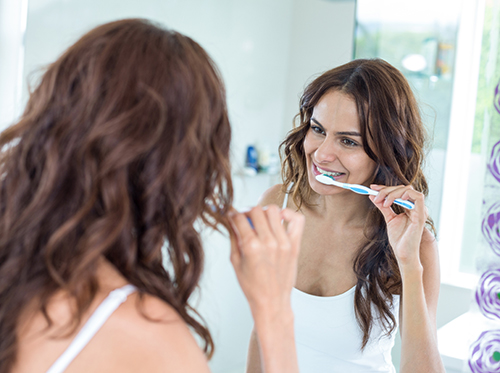
A lot of patients go at their teeth like they were sanding an old floor—that is to say, way too hard! Brushing too hard is probably the most common mistake patients make in their oral care routine, and it can be detrimental to the gums and teeth.
What can brushing too hard cause?
- Receding gums
- Bone loss around teeth
- Loss of teeth
- Tooth sensitivity, especially to hot and cold
- Worn down enamel
Brushing too hard wears away at your gums, which can lead to the neck of the teeth being exposed. This part of the tooth isn't covered by hard enamel like the rest of the tooth and hence the soft inner layer, or dentin, is exposed. Dentin is very sensitive to hot and cold and much more susceptible to bacterial decay. Once the gums recede due to improper brushing, it’s usually irreversible.
How to brush your teeth properly
You know you're supposed to brush your teeth twice a day, so why not do it right? First and foremost, you should only ever brush with a soft bristled brush—not medium or hard—unless directed otherwise by Dr. Keith J. Fabre Jr.. Unless you have braces or specific oral health issues, brushing twice a day for two minutes is usually plenty.
The main purpose of brushing is to remove plaque from your teeth and gums. Plaque is actually soft and is a buildup of bacteria, saliva, and food debris. You really don't need to brush hard to remove it, just make sure you aim your toothbrush at the gum line (where plaque grows) and brush in small circular motions, never a back-and-forth motion.
It's also wise to hold your toothbrush gently. People tend to brush harder the tighter they hold their toothbrush.
Still have questions about proper tooth brushing technique or gum health? Ask any staff member or Dr. Keith J. Fabre Jr. during your next visit to our Marrero office; we'd be happy to help!
